The Ibiza International Film Festival was founded in 2015 by filmmaker and cultural producer Oscar Herrero, alongside a founding group that included directors, producers, and critics who shared a single conviction: that the most urgent and authentic cinema being made in the world was being made independently, and that it deserved a home commensurate with its ambition.
The first edition, held in November 2015 at Cine Serra and the then-unnamed outdoor space at the Dalt Vila Bastions, screened 42 films from 17 countries before an audience of around 600 people. It was underfunded, overambitious, and almost overwhelmingly alive. A Zimbabwean filmmaker won the inaugural Falcó d'Or. A Mexican animator found her co-producer. A Romanian director met the distributor who would release her next three films. In its first seven days, the festival became what it would spend the next decade trying to live up to.
Over eleven editions, the festival has grown steadily but without losing the quality of attention that defined its beginning. From 42 to 847 submissions. From 17 to 63 countries. From 600 to over 8,000 audience members. The Ibiza Pitch, introduced at the 5th edition, has connected over 50 projects with international co-production partners. The festival has received institutional support from the Govern de les Illes Balears, the Ajuntament d'Eivissa, and the Institut d'Estudis Baleàrics, as well as from international bodies including the European Film Academy and the Cinema du Monde fund.
But what has not changed is the founding principle: that a film made in Burkina Faso or Belarus or Bolivia deserves to be seen on equal terms with a film made in France or Germany, and that the audience for independent cinema is larger, braver, and more curious than the distribution industry has ever properly understood.
Falco eleonorae — Eleonora's falcon — is a rare bird of prey that nests each summer on the sheer limestone cliffs of Ibiza and Formentera, one of only a handful of locations in the Western Mediterranean where the species still breeds. It is named after Maria Eleonora d'Arborea, the medieval Sardinian ruler who in 1392 promulgated the Carta de Logu — one of the most advanced legal codes in medieval Europe, and notably the first legal document anywhere to provide formal protection to the falcon's nesting sites. She is widely regarded as the first environmentalist in European history.
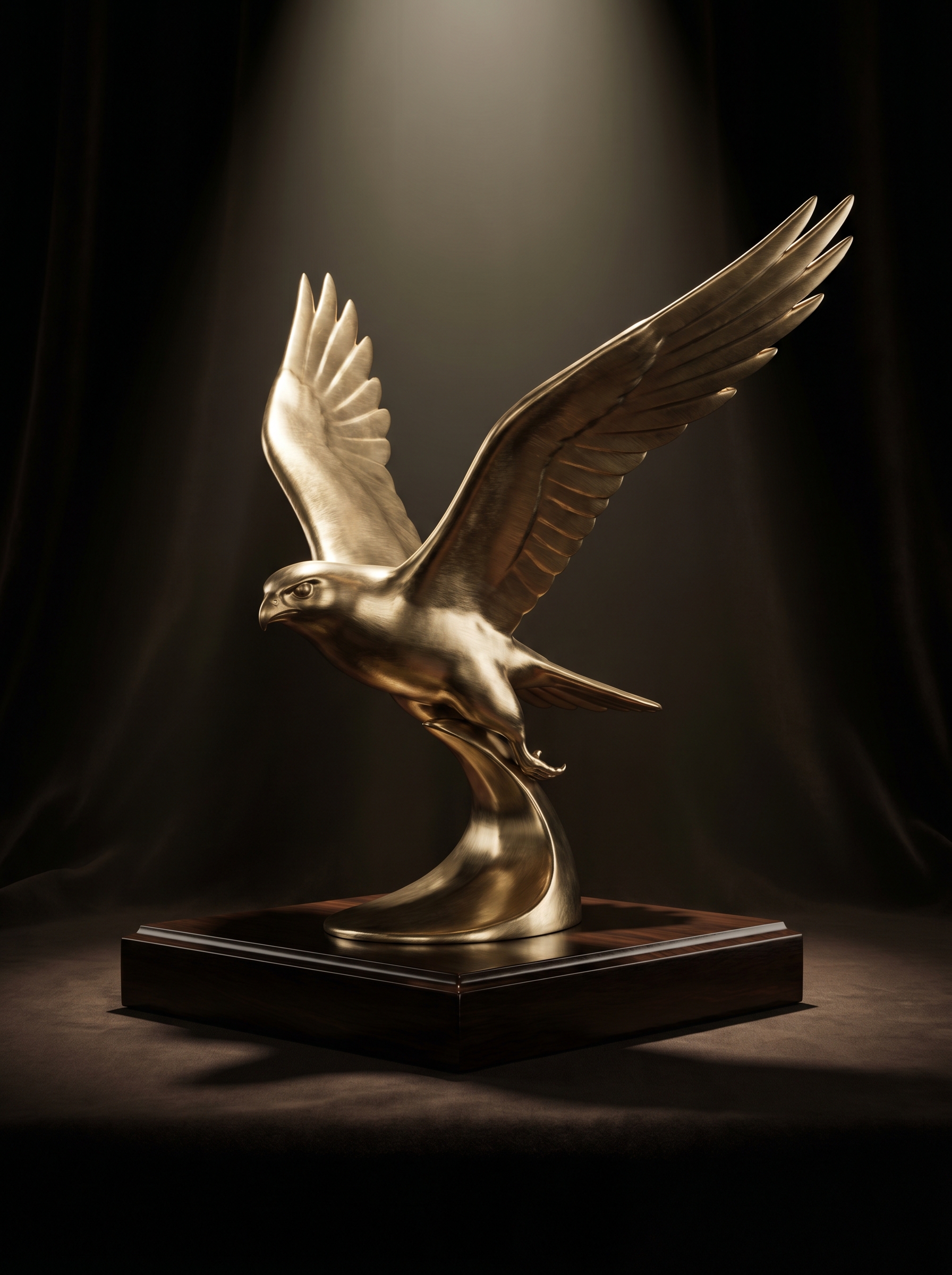
For Festival Director Oscar Herrero, the choice of name carried two equally important resonances. The first was local and ecological: the falcon is a genuine symbol of the Ibizenco landscape, present but not common, requiring patience and conditions of stillness to observe. The second was cinematic and literary: the inescapable shadow of John Huston's The Maltese Falcon — an object of legend around which human desires and deceptions orbit without ever quite touching. "The Falcó d'Or is not a thing you possess," Herrero has said. "It is a thing you earn the right to carry for a while."
The trophy is cast in bronze with a gold patina by Ibizan sculptor Miquel Guasch, who has made every Falcó d'Or since the first edition. Each is unique: Guasch makes subtle variations in each year's casting, ensuring no two trophies are identical. The festival's full name for the award is Falcó d'Or d'Eivissa — the Golden Falcon of Ibiza.
" The Ibiza International Film Festival exists to create the conditions in which independent cinema from anywhere in the world can be seen, celebrated, and connected to the audiences, distributors, and partners it deserves. We believe that budget is not vision. We believe that geography is not quality. We believe that the most important films are often the ones that arrive without champions.
Our selection process makes no distinction between films from well-funded national cinema traditions and those from countries with little or no state support for filmmakers. A debut feature shot on a phone in Guinea competes alongside a polished co-production from Germany. What matters is the quality of the story and the honesty of the telling. That principle has guided every programming decision we have made since 2015, and it will continue to guide us for as long as the festival exists.
The Ibiza IFF was founded with the support and patronage of a group of exceptional filmmakers and artists who shared its belief in the vital importance of independent cinema. Several of our founding patrons have since passed, and we honour their memory in every edition.
Introduced at the 10th edition, the Ibiza Film Labs is the festival's masterclass and professional development strand, running alongside the competition programme throughout the festival week. It offers intensive sessions in cinematography, directing, scriptwriting, financing, and distribution — led by practitioners rather than academics.
Sessions are open to all accredited guests — not just industry professionals. The Labs are built around the conviction that the most valuable professional development happens in conversation with practitioners from traditions very different from your own: a Norwegian cinematographer explaining how she finds images in near-darkness; a Moroccan scriptwriter explaining how he builds tension without conventional three-act structure; a Kazakh distributor explaining how films reach audiences in Central Asia.
The Labs do not offer formal certification. They offer something more valuable: three days in a room with people who have made extraordinary cinema under difficult conditions, willing to explain exactly how they did it.
For journalists, critics, photographers and videographers covering the festival. Includes access to all public screenings, press conferences, red carpet events, and the press room at Cine Serra.
For producers, distributors, sales agents, broadcasters, and film fund representatives. Includes all screenings, industry events, Ibiza Pitch sessions, Ibiza Film Labs masterclasses, and the industry dinner.
For directors, producers, writers, and crew of films in competition. Includes all screenings, access to filmmakers' lounge, Q&As, Ibiza Film Labs masterclasses, and all gala events. Complimentary for official competition filmmakers.
The Ibiza IFF Communications team is available to assist press and media throughout the festival. Materials including the press pack, filmmaker biographies, film synopses, official photography, and programme documentation are available upon request.
C. Arzobispo Cardona Riera, 17
Oficina 7
Ibiza, Baleares 07800
Spain